STANDARDIZATION
PRESENT DAY: The Organization of Scientific Area Committees for Forensic Science (OSAC)
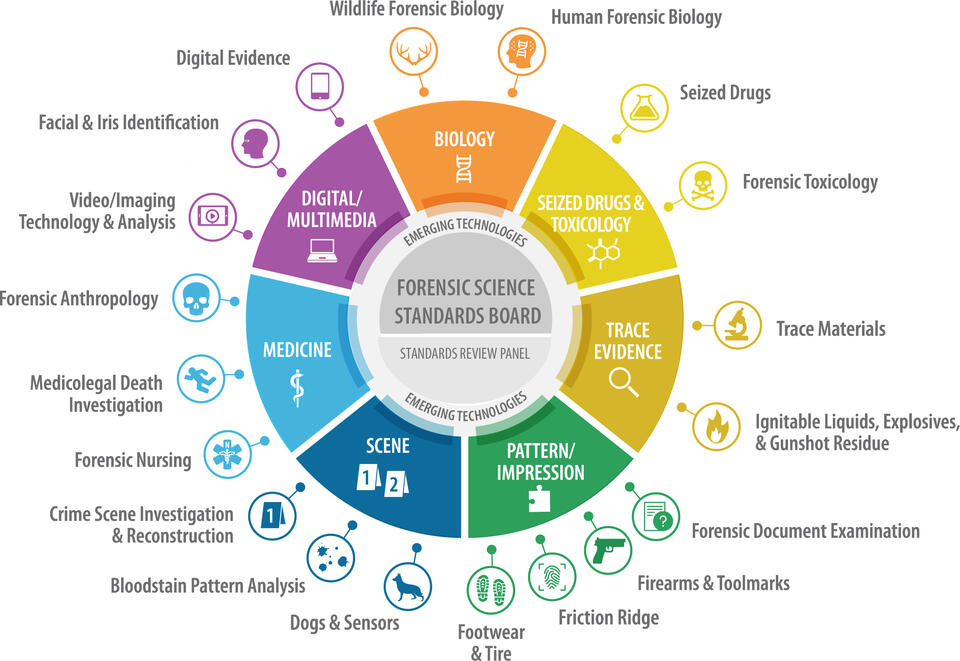
OSAC strengthens the nation’s use of forensic science by facilitating the development and promoting the use of high-quality, technically sound standards. These standards define minimum requirements, best practices, standard protocols and other guidance to help ensure that the results of forensic analysis are reliable and reproducible.
OSAC, administered by NIST and part of NIST's Forensic Science Program, was created in 2014 to address a lack of discipline-specific forensic science standards. OSAC fills this gap by drafting proposed standards and sending them to standards developing organizations (SDOs), which further develop and publish them.
OSAC also reviews standards and posts high quality ones to the OSAC Registry. Inclusion on this registry indicates that a standard is technically sound and that laboratories should consider adopting them. Recent additions to the registry cover DNA mixture interpretation, digital evidence examination and wildlife forensics. Hundreds more are in the pipeline.
OSAC’s 800+ volunteer members and affiliates work in forensic laboratories and other institutions around the country and have expertise in 19 forensic disciplines, as well as scientific research, measurement science, statistics, quality assurance and law. OSAC drafts and evaluates forensic science standards via a transparent, consensus-based process that allows for participation by all stakeholders.
To stay informed about and get involved with OSAC:
- Visit the OSAC Trace Materials Subcommittee page.
- Download the Trace Evidence Collection App from the Apple App Store or Google Play Store.
- View the Trace Evidence Collection Crime Scene Investigation Videos.
- View the standards currently on the OSAC Registry.
- Join OSAC’s email list to receive news and updates..
- Follow OSAC on LinkedIn.
- If you have relevant expertise, consider applying to become an OSAC member.
HISTORICAL: Scientific Working Group for Materials Analysis (SWGMAT)
SWGMAT was dedicated to improving the field of trace evidence analysis through development of guideline documents for the analysis of fibers, paint, glass, hairs, or tape; the interpretation of data; for the training new forensic examiners; and through cooperative research projects and academic exchange.
About SWGMAT
SWGs served as a common voice for their scientific disciplines. Meetings held at least once a year allowed SWG members to come together to discuss issues of concern and reach consensus on documents drafted through out the year. In that regard, the SWGs created, prepared, and published standards and guidelines for their constituents in the forensic community. These documents provide crime laboratories a solid basis for operational requirements. Enforcement of the guidelines is left to the appropriate governing agency and each group's internal policies. The documents are published in peer-reviewed scientific journals in the group's discipline. SWGMAT has published standards and guidelines in Forensic Science Communications (can be found at FBI Archives) and in the Journal of the American Society of Trace Evidence Examiners (can be found at asteetrace.org).
SWGMAT provided the Guidelines/Best Practices that have application to Fibers, Glass, Paint, Hair, and Tape
Process To Create
- Annual meetings of representatives from state/local/private entities from across the nation as well as Canada, England, and Germany
- Discussions/presentations lead to documents and guidelines.
- Information shared through the regional associations